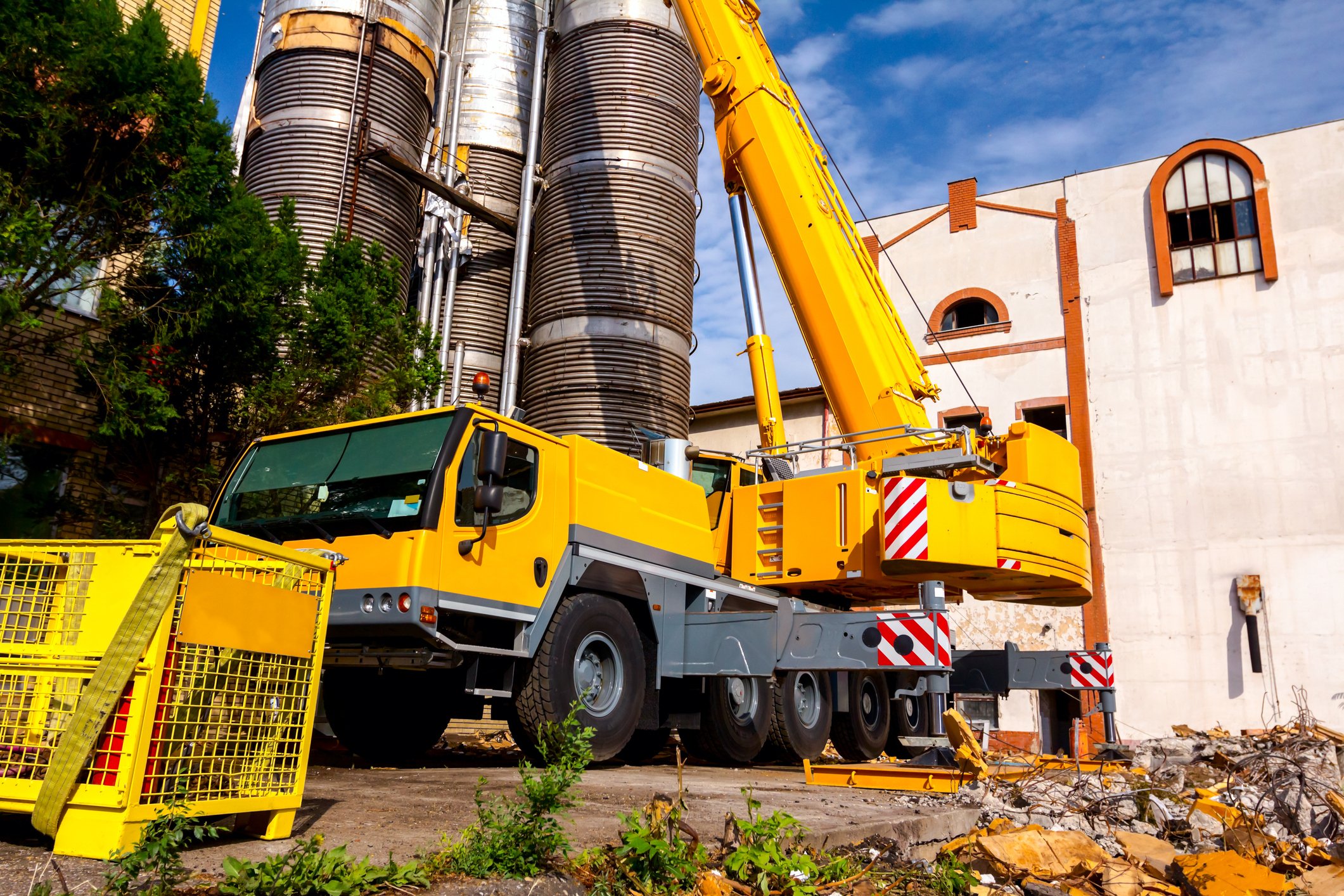
Your new mobile crane costs DKK 10 million. You can pay cash and tie up the money for years. Or you can lease it and pay a fixed amount while your money works for you in orders, new hires and growth.
Commercial leasing is paid as a fixed instalment that covers the price of the equipment and the cost of financing over the lease term. At kompasbank, there's no down payment, and the payment stays the same throughout the lease.
So which is cheaper – leasing or buying? It's not just about the purchase price. It's about what the equipment costs your business over the entire period you use it. Here's how to work it out.
Short answer: Should you lease or buy?
Leasing wins when you want to protect your cash flow. Buying outright wins on total cost.
- Choose leasing if you want to keep cash in the business. No down payment and a fixed payment, so you know exactly what you'll pay each month.
- Choose to buy outright if you have cash that isn't needed elsewhere. It's usually the cheapest option overall, but the full amount is tied up in the equipment.
- Choose a loan if you want to own the equipment but don't have the cash. You pay interest and arrangement fees.
What is the total cost of ownership (TCO)?
Total cost of ownership (TCO) is everything the equipment costs you, from the day you acquire it until you return or sell it. The formula looks like this:
Total cost = purchase price or lease payments + financing + running costs + taxes and duties – residual value – tax savings
Most miscalculations happen because people compare a lease payment with a purchase price and forget everything else.
Eight costs to include
- Financing. If you buy outright, you tie up the full amount. If you borrow, you only tie up the down payment, but you pay interest and arrangement fees – and the bank will usually want security in the equipment, which can mean a registration fee. If you lease, the financing is built into the payment.
- VAT. If you buy, you pay the VAT upfront and only get it back at your next VAT return. If you lease, you pay VAT on each payment. Special rules apply to vehicles.
- Tax. If you own the equipment, you can depreciate it for tax purposes by up to 25% a year of its remaining value. If you lease, the payment is an operating expense for most businesses and can be deducted as you go.
- Taxes and duties. Mainly for vehicles: registration tax, weight tax or green ownership tax.
- Insurance. The equipment must be insured, whether you lease or buy.
- Service and maintenance. Costs typically rise as the equipment gets older. Ask whether servicing is included in the lease payment.
- Depreciation and residual value. If you own the equipment, you carry the risk of what it's worth when you sell it. With an operating lease, you return it when the lease ends. With a finance lease, there's usually a residual value to settle at the end.
- Cash flow. The hidden cost: what the money could have achieved elsewhere in your business.
What determines your lease payment
The more expensive the equipment, the higher the payment. The lease term matters too: a shorter term means higher payments but a lower total cost, while a longer term spreads the cost but raises the total. Your company's finances and creditworthiness also play a part – strong finances and solid accounts get you a better price. And then there's the asset itself: what it is, and what it's expected to be worth when the lease ends.
Always ask for the total price for the whole period, so you're comparing like with like.
Worked example: A mobile crane for DKK 10 million
A crane company (ApS) with 15 employees needs a new 100-tonne mobile crane to lift concrete elements and roof structures on building sites across Denmark. The crane costs DKK 10 million excluding VAT, and the company expects to use it for 5 years. It can buy the crane outright, buy it with a loan or lease it on a finance lease.
The calculation works the same way whether you're investing DKK 4–5 million in an excavator or DKK 10 million in a crane.
Day one: What leaves your account?
- Buying outright: DKK 12.5 million including VAT. You only get the DKK 2.5 million in VAT back at your next VAT return.
- Loan: A DKK 1 million down payment plus DKK 2.5 million in VAT – DKK 3.5 million in total. You get the VAT back at your next VAT return and borrow the remaining DKK 9 million.
- Leasing: The first monthly payment of DKK 175,000 plus VAT. The rest of the money stays in the business.
How tax relief works when you buy
If you buy the crane, you can't deduct the full price at once. You deduct it gradually: each year, you can deduct up to 25% of the crane's remaining tax value. Each deduction saves the company 22% in tax. Over 5 years, the company can deduct around DKK 7.6 million in total, which saves around DKK 1.7 million in tax. The saving is biggest at the start – around DKK 550,000 in the first year – and gets smaller each year. The rest of the crane's value is deducted in later years or when the crane is sold. The same applies if you buy with a loan, and you can also deduct the interest.
If you lease the crane, it's generally simpler: you deduct each payment as you pay it.
The three options over 5 years
- Leasing: No cash tied up at the start. You pay 60 monthly payments of DKK 175,000 – DKK 10.5 million in total – and deduct them as you go. At the end of the lease, there's a residual value of DKK 1 million to settle. Because the leasing company owns the crane, you often don't need to provide any other security, and you avoid a registration fee.
- Loan: You pay a DKK 1 million down payment and 60 monthly payments of around DKK 174,000 – around DKK 10.4 million in total, of which around DKK 1.4 million is interest (at an interest rate of 6%). On top of that come arrangement fees of around DKK 90,000. You own the crane from day one and get the same tax relief as when buying outright, plus a deduction for the interest. The bank will usually want a charge over the crane, which may add a registration fee.
- Buying outright: DKK 10 million is tied up in the crane from day one. You pay no interest and save around DKK 1.7 million in tax over 5 years.
Insurance and servicing apply in all three cases.
The difference: Buying outright costs DKK 10 million. Buying with a loan costs around DKK 11.5 million – a DKK 1 million down payment, DKK 10.4 million in payments and DKK 90,000 in arrangement fees. Leasing and owning the crane afterwards also costs around DKK 11.5 million – DKK 10.5 million in payments and DKK 1 million in residual value.
So in this example, a loan and leasing end up costing almost the same. The big difference is how much cash you tie up at the start: DKK 10 million if you buy outright, DKK 1 million with a loan and nothing with leasing.
The comparison above uses the same 5-year term for the loan and the lease. A longer term means lower payments but more interest overall – and vice versa.
This example is for illustration only and has been simplified. The actual payment depends on factors such as your company's creditworthiness and the asset. The calculation uses today's Danish corporate tax rate of 22%, which will gradually fall to 19% by 2029, so the actual saving will be slightly lower in later years. Selling the equipment also affects your tax. Talk to your accountant.
Operating or finance lease?
At kompasbank, you can get both operating and finance leases through our leasing partners. Which type suits you depends on the asset and the agreement. The crane in the example is on a finance lease. Here's the difference:
- Operating lease: The lessor owns the equipment, and you pay to use it. When the lease ends, you return it, extend the lease or ask for a purchase offer.
- Finance lease: You effectively carry the risks and rewards of the equipment, as if you'd bought it. It's closer to a hire purchase agreement, and there's usually a residual value to settle at the end.
For most SMEs, an operating lease doesn't appear as debt in the accounts. The same is often true of finance leases: smaller companies (reporting class B under the Danish Financial Statements Act) can choose to keep them off the balance sheet, while larger companies (class C) must include them. This can affect your financial ratios, such as your equity ratio. Talk to your accountant about how the agreement should be treated in your accounts.
When does leasing make sense – and when doesn't it?
Leasing is a good fit when:
- You want a fixed budget and to avoid large one-off costs.
- The equipment needs replacing or upgrading after a few years.
- You need the cash for growth.
- You'll need more equipment over time.
- The equipment needs to be modified or adapted, and you want that included in the financing.
Buy instead when:
- You'll keep the equipment for many years beyond a typical lease term.
- You have cash that can't earn a better return elsewhere.
- You're unsure whether you'll need the equipment for the whole period. A lease generally can't be cancelled early.
What happens when the lease ends?
It depends on the type of agreement. With an operating lease, you can usually return the equipment and lease new, ask for a purchase offer or extend the lease. With a finance lease, there's usually a residual value when the lease ends. How it's settled is set out in your lease agreement.
Make your decision in good time. With our operating leases, you must give notice at least 3 months before the lease ends – otherwise it's automatically extended by 12 months at a time.
How can kompasbank finance your investment?
kompasbank can help in several ways:
- Commercial leasing through our partnerships with selected leasing partners. You pay a fixed amount, and no down payment is required.
- Business loans from DKK 500,000 up to DKK 25 million, if you'd rather own the equipment.
- Sale and leaseback: Sell equipment you already own and lease it back to free up cash.
What you can lease: IT and communications, machinery, production equipment and tools, vehicles and transport equipment, office furniture, medical equipment and POS solutions.
Leasing framework agreement from DKK 150,000. A framework agreement works much like a credit line for equipment. You're approved for a total amount and can make several purchases within it for 12 months – without negotiating a new agreement each time. You only pay for the amount you use.
Want to see what it would cost your business? Tell us what you need to invest in, and you'll get a specific offer you can plug into the calculation above.
Apply for leasing – no obligation 🚀
Read more
- Guide to commercial leasing
- What is a business loan – and what does it cost?
- Sale and leaseback: How it works
- How Danish SMEs use leasing to strengthen cash flow and drive growth
- Leasing vehicles and transport equipment
FAQ
Is it cheaper to lease or buy?
Buying outright is often cheapest over the equipment's full lifetime, because you pay no interest. Leasing can still be the best option overall – for example, if you replace the equipment after a few years, or if you want to avoid the risk of reselling it with an operating lease.
The biggest advantage, though, is often cash flow. The money you don't tie up in equipment can go into what makes your business grow: new orders, more staff, stock or marketing. And you have a buffer if business slows down.
Can I deduct lease payments from my taxes?
For most businesses, the payment is a tax-deductible operating expense. If you own the equipment, you get tax relief through depreciation instead.
Are there special rules for vans?
Yes. Whether you can deduct the VAT depends on whether the van is used exclusively for business. See the Danish Tax Agency's rules on VAT deductions for vehicles and talk to your accountant.
Can I lease used equipment?
Yes. At kompasbank, you can lease both new and used vehicles, for example.
Can I cancel a lease early?
Generally, no. The lease can't be cancelled during its fixed term. So think about how long your business will need the equipment before you sign.
Do I need to make a down payment?
No. Commercial leasing at kompasbank requires no down payment.
Do I need to provide security when I lease?
Often not. With leasing, the leasing company owns the equipment, which in itself serves as security. For larger agreements, however, a guarantee may also be required.
What is a leasing framework agreement?
A framework agreement from DKK 150,000 that pre-approves you for a total amount. It's valid for 12 months from signing, and you can use it for as many individual leases as you like. You only pay for the amount you use, and there's no setup fee.
What equipment can be leased?
Almost any business equipment: IT hardware, machinery, tools, vans, trucks, office furniture, security equipment, medical equipment and POS solutions. See all the equipment you can lease.
This article provides general information and is not individual advice. The rules on VAT, tax and duties depend on your specific situation. Talk to your accountant before making a decision.